

A physical prototype is most useful when the engineering team knows what the hardware is intended to prove.
Prototype testing evaluates prototype hardware against defined requirements, critical parameters, interfaces, technical risks, and engineering objectives. The goal is to determine what the design is demonstrating, where uncertainty remains, and what should happen next.
For complex hardware, product prototype testing should do more than confirm that a mechanism moves, a system powers on, or an assembly fits together. Results should help the team determine whether important requirements have been met, whether unexpected behavior needs investigation, and whether the product should be refined, retested, or advanced.
Prototype Testing Questions: What Does the Hardware Need to Prove?
Before testing a prototype, return to the reason the hardware was built.
A useful test starts with a defined engineering question. Inputs may include functional requirements and critical parameters, performance requirements, technical specifications, interface definitions, engineering analyses, known failure modes, previous test results, and unresolved design risks.
Depending on the product, useful questions for prototype testing might include:
- Does the mechanism achieve the required force, speed, travel, or accuracy?
- Does the structure perform under the expected load?
- Can a thermal system maintain the required operating condition?
- Do mechanical, electrical, controls, and other subsystems interact correctly?
- Are critical interfaces and tolerance relationships behaving as expected?
- Can the product be assembled, adjusted, inspected, and serviced as intended?
- Does repeated operation expose wear, drift, heat buildup, loosening, or other failures?
Every prototype test should answer a question the engineering team needs resolved.
An early subsystem build may address one high-risk assumption. A more mature engineering prototype may need to evaluate several requirements at the integrated-system level. The test scope should match the maturity and purpose of the hardware rather than applying the same checklist to every build.
What Should Product Prototype Testing Evaluate?
For complex mechanical, electrical, and electromechanical hardware, engineering prototype testing generally evaluates several types of evidence.
Functional & Performance Requirements
Prototype verification should determine whether the hardware performs its intended functions and whether measurable performance falls within the required range.
Depending on the product, that may include motion, force, speed, pressure, flow, temperature, electrical behavior, controls response, positional accuracy, vibration, output, or other defined parameters.
Where possible, results should be compared with measurable requirements or critical parameters rather than a subjective conclusion that the prototype “works.”
A mechanism completing its motion once, for example, provides different evidence than demonstrating that it achieves the required travel under the expected load and within defined accuracy limits.
Fit, Interfaces & System Integration
Individual parts or subsystems can perform correctly and still create problems when combined into a complete product.
Integrated prototype hardware can reveal issues involving dimensional fit, tolerance stack-up, alignment, wiring or hose routing, service access, sensor placement, subsystem communication, controls interaction, thermal interfaces, assembly clearances, or interference during motion.
These interactions can be difficult to evaluate completely in CAD or through isolated component testing.
Failure Modes & Reliability
Prototype testing should not be structured only to produce passing results.
Testing may investigate known failure modes, operating limits, environmental conditions, component limits, repeated cycling, or other risks identified through requirements, engineering analysis, FMEA, or previous builds.
Cycle, endurance, thermal, or load testing can also reveal wear, loosening, drift, heat buildup, intermittent failures, or component degradation. At the prototype stage, this may not establish final product life, but it can identify behavior that warrants additional engineering work.
Manufacturability & Assembly Feedback
Not every useful result comes from instrumentation.
Technicians and manufacturing engineers working with the hardware may identify difficult assembly sequences, limited access, excessive adjustment, tolerance-related fit issues, routing conflicts, unclear documentation, difficult inspection points, or tooling and fixture needs.
Those observations are part of prototype testing and evaluation. For manufacturing-bound hardware, the team should learn both how the product performs and what the physical build reveals about its manufacturability.
Prototype Testing Methods: Match the Method to the Question
How to test a prototype depends on the requirement, interface, failure mode, or engineering risk being evaluated.
There is no universal set of prototype testing methods for every product. Different types of prototype testing may also be appropriate as the hardware matures.
Common methods for physical hardware include:
- Functional testing confirms whether a component, subsystem, or complete system performs its intended function.
- Performance testing measures parameters such as force, speed, accuracy, pressure, flow, temperature, response time, or electrical output.
- Dimensional inspection evaluates critical dimensions, GD&T, alignment, tolerance relationships, fit, and interfaces.
- Structural or load testing evaluates hardware response to expected forces or defined limit conditions.
- Environmental testing evaluates performance under relevant temperature, humidity, vibration, contamination, or other conditions.
- Cycle and endurance testing evaluates behavior over repeated operation.
- Subsystem testing isolates a mechanism, circuit, interface, or technical question.
- Integrated system testing evaluates interactions among mechanical, electrical, controls, software, and other subsystems.
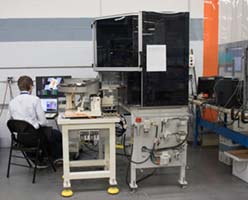
The appropriate prototype testing methods should become more controlled as the hardware matures and the required evidence becomes more rigorous.
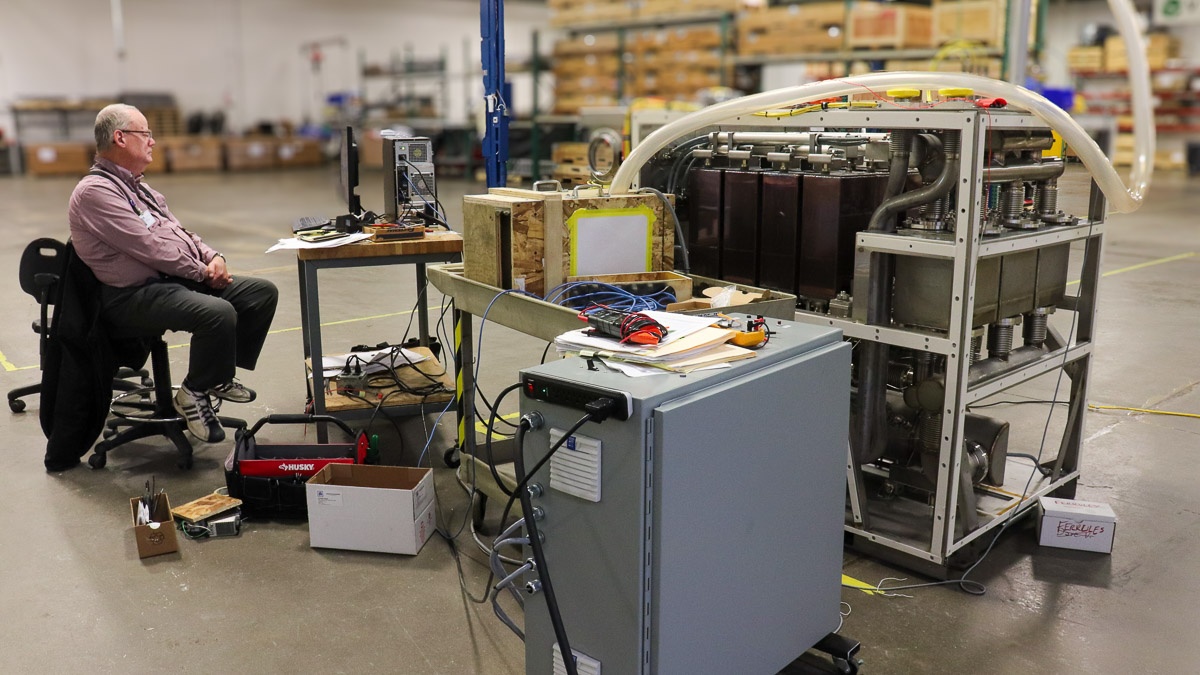
An early prototype may use temporary instrumentation or a focused engineering setup, while a more mature build may justify controlled fixtures, calibrated measurement equipment, data acquisition, documented procedures, or representative operating conditions.
Build a Prototype Testing Plan Before Running the Test
Once the engineering questions are defined and the appropriate types of prototype testing are selected, the team can document how each test will be executed and evaluated.
A useful prototype testing plan starts with the prototype testing questions the build needs to answer and connects each one to the evidence the engineering team needs to collect.
Each significant test should define the requirement or risk being evaluated, hardware configuration, test method, operating conditions, instrumentation, data to be recorded, and the basis for evaluating the result.
In more formal prototype verification, that structure also helps maintain traceability between the requirement, test method, and resulting evidence. A requirements verification matrix can then provide a clear record of which requirements have been evaluated and the outcome of each test.
Define Acceptance Criteria
Acceptance criteria should come from the applicable requirement, specification, critical parameter, engineering objective, or technical risk.
Instead of: The mechanism should move smoothly.
A more useful criterion might define required travel, force, speed, positional accuracy, allowable vibration, or another measurable characteristic.
In prototype verification, measurable criteria like these provide the basis for determining whether the hardware has demonstrated the required performance.
Not every prototype test requires a production-level pass/fail threshold. Exploratory testing may be intended to characterize behavior rather than prove compliance with a finalized requirement.
Even then, the team should establish what it wants to learn and what decision the result will support before seeing the data.
Prototype Evaluation: Turn Test Results into Engineering Decisions
A failed test does not automatically mean the design needs to change.
Unexpected results may come from the design itself, tolerance or interface conditions, material or component behavior, assembly variation, controls, an incomplete requirement, the test setup, or instrumentation error.
Effective prototype evaluation therefore starts by determining why the observed result occurred.
Review the hardware configuration, test conditions, measurement method, requirements, and available engineering data before selecting corrective action. Otherwise, the team risks modifying the product in response to a test problem rather than a design problem.
Once the result is understood, the team can determine whether the finding requires additional analysis, another test, an engineering change, a component or interface revision, updated documentation, a manufacturing adjustment, or another prototype iteration.
Approved changes should then be incorporated into the applicable CAD models, drawings, BOMs, specifications, controls documentation, or other technical information before the next build.
Iterate, Retest, or Advance?
Prototype evaluation should ultimately determine whether the available evidence supports another iteration, additional testing, or advancement to the next build stage. Not every test finding requires another complete prototype, and not every technical unknown must be eliminated before the product advances.
Another iteration may be justified when a critical requirement was not achieved, the cause of a failure remains uncertain, a significant design change needs physical confirmation, interacting subsystems have changed, an important interface remains unresolved, or the existing prototype no longer represents the revised design accurately enough to generate useful data.
In other cases, the team may be able to modify the current hardware, evaluate a subsystem independently, repeat a test under corrected conditions, or resolve a lower-risk issue through analysis or documentation.
Before moving into a more controlled pilot production environment, the engineering team should have enough evidence to understand the significant remaining risks. Critical functions and interfaces should have been evaluated, major failures investigated, approved changes incorporated into the current product definition, and unresolved risks given a defined path to closure.
The question is not simply whether the prototype passed.
It is: What uncertainty remains, and is another build the best way to resolve it?
Use Prototype Testing to Support the Next NPI Decision
The value of prototype testing, evaluation, and verification is in understanding what the hardware proved, what remains uncertain, and what should happen next.
PEKO’s prototype development services can support additional build and refinement work for complex hardware NPI programs.
For programs that require more formal test strategies, fixtures, procedures, or repeatable test systems, PEKO’s test development capabilities can support the next level of prototype evaluation.
If your organization is also assessing whether the product and manufacturing program are ready to enter a structured NPI process and ultimately scale up manufacturing, PEKO’s NPI Self-Assessment Checklist provides a broader review of the technical and manufacturing factors that should be in place.