

A manufacturing process that works for a few pilot builds may not work once demand becomes recurring. As output increases, material has to arrive at a predictable cadence, assembly and test have to keep pace, and the production operation needs enough capacity to support the forecast without adding unnecessary cost or complexity.
For hardware startups and established OEMs alike, this is where the idea of mass production can be misleading. Complex equipment does not need consumer-product volumes to require a disciplined production system. The right goal is a manufacturing operation that can reliably build the product at the rate the business and its customers actually need.
Scaling hardware production starts with understanding what that rate looks like for the product, then matching capacity, production methods, supply chain, test, and process controls to support it.
 What Does Mass Production Mean for Complex Hardware?
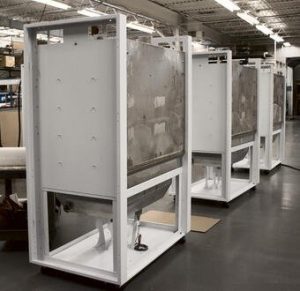
For consumer goods, mass production often brings to mind very large quantities of standardized products moving through highly repetitive manufacturing processes. Complex machinery, industrial equipment, and electromechanical systems rarely fit that picture neatly.
Product size, assembly hours, test time, configuration variation, component lead times, and customer demand all influence what an appropriate production system looks like.
Full Scale Production Depends on Required Output
There is no universal unit count that defines full scale production. The meaningful target is the rate the program actually needs to support reliably.
For one product, that could mean several hundred large systems per year. Another may require thousands of smaller assemblies. What matters is whether the manufacturing operation has the people, material, equipment, test capacity, and process control needed to sustain that demand.
Batch and Volume Production Can Still Be Full Scale
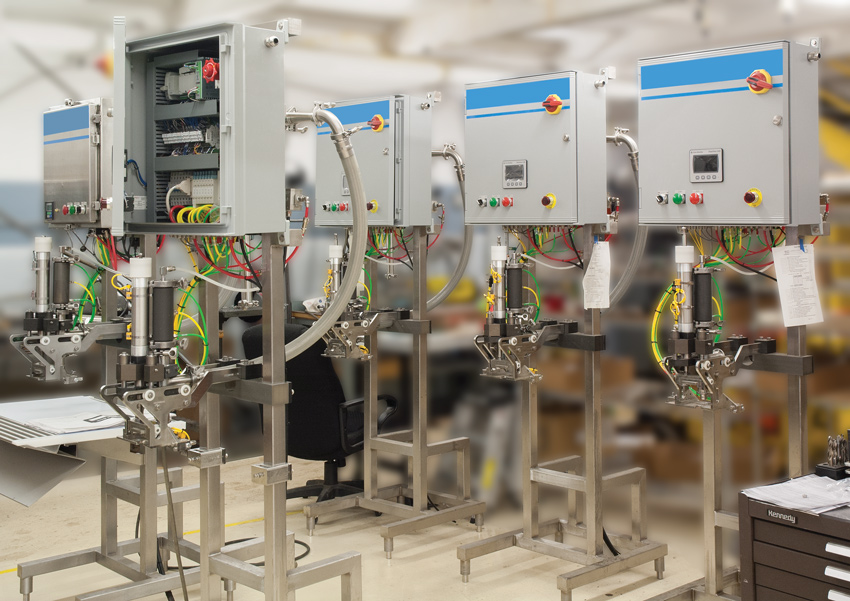
For complex equipment, batch production vs mass production is not always a clean either-or decision.
A product may reach its intended production rate while still being built in recurring batches or manufacturing cells.
Volume production can rely on skilled manual assembly, semi-automated processes, dedicated tooling, or manufacturing cells rather than a continuous high-speed line. Large scale production should reflect the output the business needs rather than force the product into a manufacturing model designed for much higher-volume goods.
Scaling Hardware Production Starts with the Required Rate
Before adding floor space, equipment, automation, or people, define what the operation actually needs to produce and how quickly you expect demand to change.
Useful inputs include:
- expected units per week, month, and year
- the timing and shape of the production ramp
- product mix and configuration variation
- assembly, inspection, and test time per unit
- supplier lead times and material requirements
- expected changes in demand over time
Those inputs turn a sales or production forecast into a capacity requirement. Building ten large machines each month requires a very different operation from producing one hundred smaller assemblies each week, even though both programs may represent meaningful recurring production.
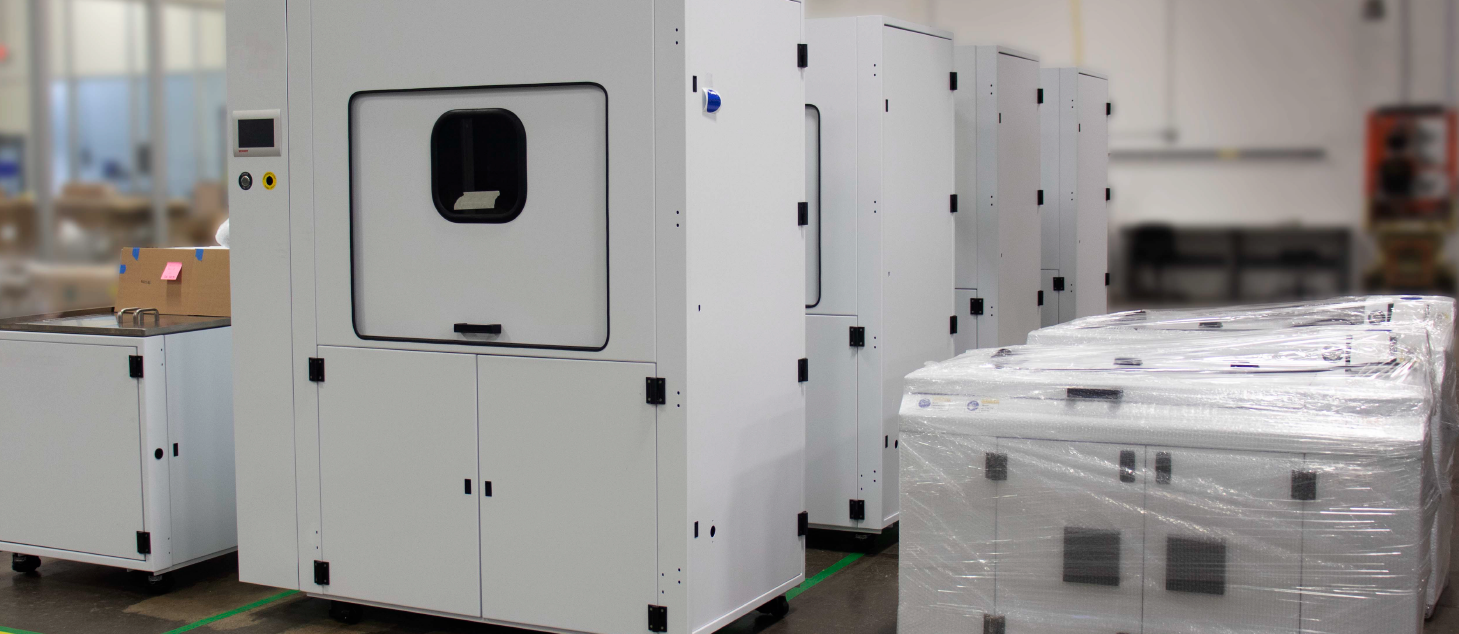
Capacity should follow a realistic forecast. Build too far ahead of demand and you can add unnecessary fixed cost. Wait too long and labor, equipment, test capacity, material, or floor space can become bottlenecks. When scaling hardware production, add resources in step with actual demand rather than building for the largest possible future scenario.
Decisions about where that future capacity will come from often begin earlier in product development planning, when teams evaluate internal resources, infrastructure, supplier strategy, and outside manufacturing support.
Choose a Production Model That Fits the Product and Forecast
Higher demand often leads teams to think immediately about automation. Automation can be valuable, but it is most effective when the product and manufacturing process are stable enough, the work is sufficiently repeatable, and the expected volume can justify the investment.
For complex machinery and electromechanical equipment, skilled assembly combined with standardized workstations, tooling, fixtures, manufacturing cells, and selective automation may be a better fit than a fully automated line.
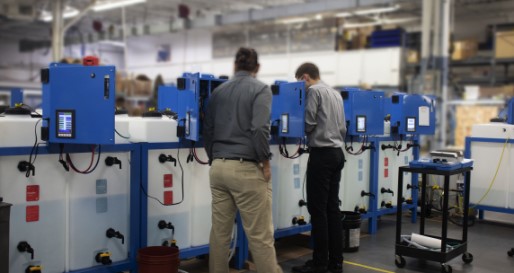
For teams evaluating how to mass produce a product, the more useful question is not, “How much can we automate?”
It is, “What combination of people, equipment, tooling, and capacity can support the required production rate reliably?”
The right production model should also leave room for the realities of complex hardware. Product configurations may change, engineering updates may continue, and some operations may remain difficult or uneconomical to automate. Good production flow comes from designing the operation around the product and forecast rather than copying a manufacturing model built for a different type of product.
What Changes as Production Volume Increases?
Scaling hardware production affects much more than floor space and headcount. As volume increases, decisions made earlier in hardware product development can become more visible in sourcing, assembly, testing, and production flow. Problems that were manageable during a handful of builds can become recurring constraints once several products are moving through manufacturing at the same time.
The Supply Chain Has to Support Recurring Demand
At higher production volumes, supplier capacity and lead-time variability become production constraints rather than isolated purchasing problems.
Long-lead components, minimum order quantities, sole-source parts, supplier capacity, inventory levels, and approved alternatives all become more important. Purchasing also needs to support the planned build cadence rather than treating every machine or assembly as a separate project.
A component shortage that delays one early unit may be inconvenient. The same shortage during volume production can interrupt several builds, increase work in process, and disrupt the production schedule.
Build and Test Need Repeatable Flow
A process that depends on one experienced technician remembering how everything goes together becomes harder to sustain as more people and products enter the operation.

Work instructions, tooling, assembly sequence, inspection points, technician training, and material presentation need enough consistency for the broader team to repeat the build.
Test capacity deserves the same attention. A test method that works well during pilot production can become a bottleneck when several units need the same equipment, software, or technician at the same time.
Quality Data Has to Support Higher Output
Higher production volume provides more information about how the process is actually performing. Yield, rework, cycle time, inspection results, and test failures can show whether manufacturing is stabilizing or whether recurring problems are becoming more visible.
Measures such as process capability can also help determine whether key manufacturing processes are consistently meeting requirements rather than relying on inspection to catch variation after the fact.
The goal is not simply to collect more data. It is to use that information to understand where the process needs attention before higher output magnifies the problem.
Configuration Changes Affect More Units
Engineering changes also have broader consequences once there is purchased inventory, work in process, completed equipment, and potentially multiple revisions moving through production at once.
When a component, drawing, BOM, test method, or work instruction changes, the team needs to know when that change takes effect and which units receive the new configuration.
That makes configuration control increasingly important as production grows. A change that is easy to communicate during a two-unit build can become much harder to manage across dozens of units, suppliers, and technicians.
Build for the Production Rate You Actually Need
Complex hardware does not need consumer-product quantities to require disciplined mass manufacturing. Whether the program uses recurring batches, manufacturing cells, selective automation, or a higher-volume production line, the operation should be designed around the product, forecast, and rate the business actually needs.
Not every program is ready to increase output simply because demand exists. If documentation, manufacturability, sourcing, quality controls, testing, or manufacturing processes still need to be proven, NPI manufacturing should address those gaps before the production operation is expanded.
Once the product and process are controlled enough to support recurring builds, the focus can shift to increasing capacity and sustaining the required production rate. Material availability, build and test flow, quality performance, configuration control, and production resources all need to support that demand together.
 If your product is moving beyond pilot production and preparing for higher recurring output, PEKO’s manufacturing scale-up services support the transition from controlled builds toward sustained production. Once the production operation is established, PEKO can continue supporting the program through recurring contract manufacturing.
Contact PEKO to discuss your current production status, forecast, and expected build requirements. If you are still evaluating whether the product and manufacturing program are ready for the next stage, download the NPI Self-Assessment Checklist below.