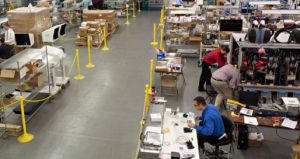


Machine assembly requires more than fitting parts together. For OEMs building complex machinery, equipment, and integrated systems, the assembly process can affect quality, schedule, safety, repeatability, and long-term product performance.
Complex equipment builds often involve fabricated structures, machined components, purchased parts, wiring, sensors, controls, fasteners, tubing, enclosures, and multiple subassemblies. Each part must arrive at the right time, fit correctly, follow the latest documentation, and move through the build in a controlled sequence.
That is why effective assembly methods matter. Whether the program involves OEM machine assembly, industrial machinery assembly, or the assembly of equipment used in specialized applications, the goal is the same: create a repeatable process that helps technicians build complex products accurately and efficiently.
What Is Machine Assembly?
Machine assembly is the process of building a complete machine or piece of equipment from fabricated parts, machined components, purchased items, subassemblies, and integrated systems.
For complex OEM programs, this work may include mechanical fit-up, fastening, alignment, wiring, cable routing, pneumatic or fluid connections, control panel integration, inspection, and functional testing. It also often requires coordination between engineering, quality, supply chain, production, and program management teams.
Unlike simple product assembly, machinery assembly typically involves larger structures, custom components, multiple build stages, controlled documentation, and more technical inspection points. A defined assembly process helps ensure each build is completed accurately, safely, and repeatably.
Why Complex Machine Assembly Requires a Controlled Process
Complex equipment does not come together by accident. Even experienced technicians need accurate documentation, organized work areas, proper tools, safe material handling, and clear quality checkpoints.
Without a controlled process, teams may face missing parts, unclear instructions, rework, schedule delays, safety risks, or inconsistent builds. These issues are especially common during first-time builds, production transfer, or programs with evolving documentation.
A strong machine assembly process helps teams:
- Follow the latest drawings and work instructions
- Reduce wasted movement and searching
- Improve build consistency
- Identify issues earlier in the process
- Track labor and schedule performance
- Maintain safer work areas
- Support inspection and testing requirements
- Improve repeatability from one build to the next
Machine Assembly Methods That Improve Build Consistency
1. Start With Assembly Planning & Documentation
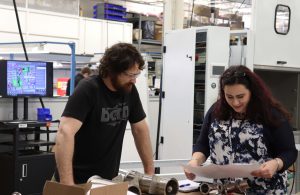
Good assembly starts before parts reach the floor. Technicians need access to current drawings, 3D models, work instructions, manufacturing packages, revision information, and inspection requirements.
For complex OEM machine assembly, documentation control is especially important because small changes can affect fit, alignment, wiring, routing, or final performance. If teams are working from outdated information, rework becomes more likely.
Assembly planning should define:
- Build sequence
- Required tools and fixtures
- Critical inspection points
- Safety considerations
- Engineering change requirements
- Assembly documentation
- Test or acceptance criteria
Giving assembly teams access to accurate technical data helps reduce miscommunication and supports more consistent execution.
2. Use 5S to Organize the Assembly Area
5S is a workplace organization method based on Sort, Set in Order, Shine, Standardize, and Sustain. In machine assembly, 5S helps technicians keep parts, tools, documents, and work areas organized throughout the build.
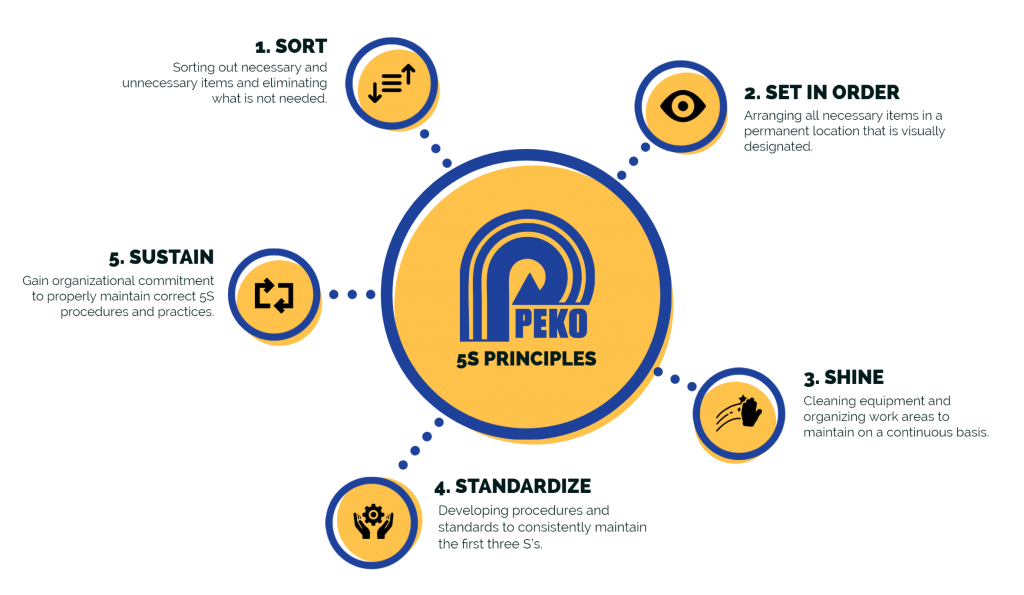
This matters because complex equipment builds often involve many components and long assembly cycles. A disorganized work area can lead to lost time, misplaced parts, unnecessary movement, and avoidable errors.
Assembly methods should improve as teams learn from each build. Even small changes can reduce labor time, improve quality, or make the process easier to repeat.
A well-organized assembly area should make it clear where tools belong, where parts are staged, how materials flow, and what work is currently in process. This helps technicians work more efficiently while supporting safety and repeatability.
3. Design Assembly Cells Around the Build
The layout of the assembly area can have a direct impact on productivity and quality. For large or complex equipment, teams need enough space to move safely, access multiple sides of the build, stage parts, position tools, and connect required utilities.
Before a build begins, manufacturers should consider:
- Flow of people, parts, and materials
- Access to electrical, air, water, or other utilities
- Space for frames, enclosures, or large subassemblies
- Safe movement of heavy components
- Tool and fixture placement
- Inspection access
- Separation from unrelated work
Dedicated assembly cells can help reduce crossover between programs and keep the team focused on the specific requirements of the build.
4. Control Time, Labor, & Build Progress
Time tracking is not just an administrative task. In machine assembly, tracking actual labor against planned labor can help identify bottlenecks, improve future estimates, and keep programs on schedule.
This is especially useful when assembly tasks vary from one build to the next. Wiring, alignment, calibration, mechanical fit-up, and system integration can take different amounts of time depending on the configuration and documentation maturity.
By tracking labor and recurring issues, teams can see where delays occur and where process improvements may be needed. Over time, that data can support better planning, more accurate quoting, and stronger delivery performance.
5. Build Safety Into the Assembly Process
Safety is critical in machine assembly because teams often handle large frames, heavy components, electrical systems, moving parts, and complex work areas. A safe process protects employees and supports better quality by reducing rushed work, clutter, and avoidable disruption.
Safety planning may include proper lifting methods, ergonomic workstation setup, clear walkways, safe tool use, lockout/tagout awareness where applicable, and defined handling procedures for large or awkward components.
A clean, organized, safety-focused assembly environment helps technicians do precise work with fewer distractions and lower risk.
6. Use Skilled Technicians & Cross-Training
Complex machine assembly depends heavily on technician skill. Assemblers may need to interpret drawings, follow manufacturing packages, understand wiring diagrams, perform mechanical fit-up, route cables, handle custom components, and complete precision alignment tasks.
Cross-training can help build a more flexible team. When technicians understand multiple parts of the assembly process, they are better prepared to support changing schedules, identify issues, and maintain consistency across builds.
For OEMs, technician skill is a major factor when evaluating machine assembly services. The right partner should have teams that understand both the technical requirements of the build and the production discipline needed to repeat it.
7. Add In-Process Inspection & Functional Checks
Inspection should not wait until the end of the build. In-process checks help identify issues before they become harder and more expensive to correct.
Depending on the equipment, these checks may include:
- Torque verification
- Mechanical fit-up checks
- Alignment checks
- Wiring and cable routing review
- Pneumatic or electrical checks
- Fastener and hardware verification
- Subassembly inspection
- Factory acceptance testing
For complex equipment assembly, testing and inspection help confirm that the machine or system meets the required specifications before it moves to the next stage.
8. Improve Assembly Methods After Each Build
Continuous improvement may include refining work instructions, improving tooling or fixtures, adjusting assembly cell layout, changing inspection points, improving part staging, or identifying tasks that could benefit from automation.
The goal is not just to complete one build successfully. The goal is to create a stronger process for the next build.
Common Challenges in OEM Machine Assembly
First-Time Builds & NPI
First-time builds often involve evolving designs, incomplete documentation, and unknown production variables. New product introduction (NPI) support can help prepare the program for repeatable assembly by reviewing documentation, identifying manufacturability issues, clarifying build steps, and defining inspection requirements.
For OEMs moving from prototype to production, this early work can reduce the risk of rework, delays, and unclear assembly expectations.
Complex BOMs & Part Availability
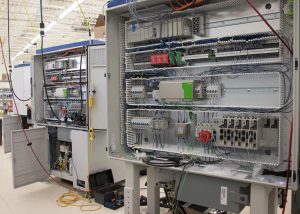
Machine assembly depends on having the right parts available at the right time. Complex bills of materials (BOMs), long-lead components, revision changes, and missing purchased parts can all affect the assembly schedule.
Detailed BOM management, revision control, kitting, and part-flow planning are their own disciplines. For assembly teams, the key is ensuring that parts are available, properly identified, and staged in a way that supports the build sequence.
Repeatability Across Low- or Mid-Volume Builds
OEM machine assembly often involves low- to mid-volume builds, product variations, or custom configurations rather than continuous high-volume production. In that environment, repeatability depends on having a controlled process that can be followed from one build to the next.
That process should include accurate documentation, trained assembly technicians, organized work areas, defined inspection points, and feedback loops between assembly, engineering, quality, and program management.
How PEKO Supports Machine Assembly Services
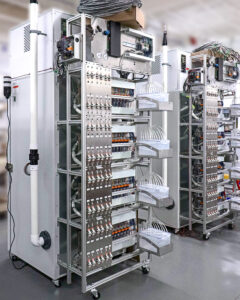
PEKO provides machine assembly services for OEMs building complex machinery, equipment, assemblies, and integrated systems. Our work supports custom machine building programs that require careful coordination between manufacturing, assembly, quality, supply chain, and program management.
Depending on the program, PEKO can support mechanical assembly, electromechanical assembly, equipment assembly, system integration, inspection, testing, and production documentation. Our vertically integrated capabilities also allow us to support related manufacturing needs such as CNC machining, sheet metal fabrication, welding, finishing, and sourcing.
For OEMs, this integrated approach can help reduce supplier handoffs and create a more controlled path from components to completed equipment builds.
Talk With PEKO About Your Machine Assembly Program
If your team needs machine assembly services for complex OEM equipment, machinery, or integrated systems, PEKO can help evaluate the assembly requirements, documentation, quality expectations, and build process needed to support repeatable execution.