

High mix low volume manufacturing creates a unique challenge for OEM machinery production: every build may be complex, but few builds are exactly the same.
Unlike high-volume production, where stable designs and repeated processes can be refined over long runs, HMLV manufacturing often involves smaller batches, custom configurations, frequent engineering changes, and more variation from one build to the next. For complex machinery, equipment, and integrated systems, that variation can make bill of materials (BOM) control and part flow difficult to manage.
A missing component, outdated revision, incorrect quantity, or delayed purchased item can stop a build, create rework, or push delivery dates. That is why BOM accuracy, revision control, material readiness, kitting, and traceability are critical in high-mix, low-volume machinery production.
 Why HMLV Machinery Production Is Hard to Control
High mix low volume manufacturing combines two sources of complexity: product variety and limited production volume. OEMs may need to build multiple configurations, each with different parts, options, drawings, customer requirements, or revision levels.
In machinery production, that complexity often extends across fabricated structures, machined components, sheet metal parts, purchased items, wiring, controls, sensors, motors, fasteners, tubing, packaging, and test-related materials. Many of those items may have different lead times, suppliers, inspection requirements, and documentation needs.
The result is a production environment where small errors can have large effects. If one part is missing, built to the wrong revision, staged late, or assigned to the wrong configuration, the issue may not surface until assembly, integration, inspection, or final testing. At that point, the cost of correction is usually higher.
Why BOM Accuracy Matters in High Mix Low Volume Manufacturing
The BOM is the production blueprint for a machine, assembly, or system. It tells sourcing, planning, manufacturing, assembly, quality, and inspection teams what must be purchased, made, staged, installed, and verified.
In HMLV manufacturing, BOM accuracy affects nearly every downstream activity. Sourcing teams use the BOM to place orders and manage lead times. Production teams use it to plan work orders and route materials. Assembly teams use it to confirm parts and build sequence. Quality teams use it to verify documentation, inspection requirements, and traceability.
When the BOM is incomplete or outdated, the production system becomes harder to control. Common issues include missing parts, incorrect quantities, mixed revisions, incomplete kits, duplicate orders, and delayed discovery of obsolete or unavailable components.
For complex machinery production, BOM control is not just an administrative task. It is one of the main ways manufacturers protect schedule, quality, cost, and delivery performance.
Common BOM & Material Flow Risks in High Mix Low Volume Manufacturing
Revision Changes & Mixed Build Requirements
Engineering changes are common in high-mix, low-volume programs, especially when a machine is being refined, transferred, customized, or updated for a specific customer requirement.
The risk is that engineering, sourcing, production, and assembly teams may not all be working from the same revision. A changed bracket, updated cable, alternate sensor, or revised fabricated frame can affect sourcing, fit-up, assembly sequence, inspection, and testing.
A strong revision-control process helps confirm that released drawings, BOMs, travelers, work instructions, and kits all reflect the current build requirements.
Multi-Level BOMs & Subassembly Dependencies
Complex machinery is rarely built from a flat parts list. It often includes multiple levels of assemblies and subassemblies, each with its own components, drawings, revisions, and dependencies.
If one subassembly is delayed, incomplete, or built to the wrong revision, the issue can affect the entire final build. Multi-level BOM control helps teams understand how parts, subassemblies, and higher-level assemblies connect so material readiness can be managed before production is released.
Purchased, Fabricated, & Consigned Material Ownership
High mix low volume contract manufacturing often involves a mix of purchased parts, fabricated parts, machined components, commercial off-the-shelf items, OEM-supplied materials, and outside-processed components.
Each material type may require different sourcing, inspection, storage, and traceability practices. Clear ownership is important. Teams need to know which parts are supplied by the OEM, which are sourced by the manufacturer, which are made in-house, and which depend on outside suppliers or special processes.
Without clear ownership, programs can run into duplicate orders, missing parts, unclear inspection responsibility, or inventory mismatches.
Long-Lead Components & Obsolescence Risk
Low production volume does not remove the need for long-lead planning. In some cases, it makes planning harder because purchasing volumes may be smaller and demand may be less predictable.
Long-lead items, single-source components, end-of-life parts, supplier constraints, and outside processing delays should be identified early. When sourcing risk is discovered after assembly is scheduled, the program may face avoidable shortages, partial builds, or schedule disruption.
How to Improve BOM Management in High Mix Low Volume Manufacturing
Use a Single Source of Truth for BOM Data
HMLV manufacturing requires a controlled source of truth for part numbers, quantities, revisions, approved suppliers, and build requirements. A digital BOM system connected to enterprise resource planning (ERP), material requirements planning (MRP), work orders, or production travelers can improve visibility and reduce manual errors.
The goal is to make sure engineering, purchasing, production, assembly, and quality teams are working from the same released information.
Verify the BOM Before Release to Production

Before a build is released, the BOM should be reviewed for accuracy and completeness. That review should confirm part numbers, quantities, revisions, supplier status, long-lead items, missing documentation, inspection requirements, and open engineering questions.
For new product introduction, production transfer, or repeat builds with changes, this step can prevent small documentation issues from becoming larger production delays.
Connect BOM Review to Sourcing & Lead Times
BOM review should connect directly to sourcing and procurement planning. Critical components, long-lead materials, alternate-source needs, obsolete items, and customer-supplied parts should be reviewed early enough to support the build schedule.
This is especially important in high mix low volume contract manufacturing, where each program may have different material requirements and demand patterns. The sooner sourcing risks are identified, the more options the OEM and manufacturing partner have to resolve them.
Improve Part Flow with Kitting & Clear-to-Build Checks
Kitting helps organize materials around a work order, build phase, subassembly, or final assembly sequence. For complex machinery production, kits should be complete, clearly labeled, revision-controlled, and aligned with the latest BOM.
A clear-to-build check confirms that required materials, documentation, revisions, and critical inputs are available before a work order or assembly build is released. This helps prevent partially built machines, idle labor, mid-build shortages, and schedule disruption.
Together, kitting and clear-to-build discipline help assembly teams start work with the right parts, current documentation, and fewer avoidable interruptions.
Maintain Material Traceability Through the Build
Supply chain traceability connects received materials, inspection records, revision status, work orders, kits, subassemblies, and final builds. For complex machinery production, this can support quality documentation, nonconforming material control, corrective action, and final acceptance.
Traceability is especially important when programs involve regulated industries, serialized components, customer-supplied parts, or documentation-intensive builds.
How Material Readiness Supports Assembly, Testing, & Delivery
Strong BOM and part-flow controls make downstream machine assembly more predictable. Assembly teams need the right parts, correct revisions, current documentation, and complete kits before work begins.
When material readiness is controlled, technicians spend less time waiting, searching, or resolving avoidable part issues. Inspection and testing teams also benefit because traceability, documentation, and build records are easier to verify.
This is where BOM management connects directly to delivery performance. The more disciplined the material flow, the easier it is to maintain schedule visibility and reduce late-stage surprises.
How to Evaluate a High Mix Low Volume Contract Manufacturing Partner
Not every contract manufacturer is prepared for HMLV machinery production. OEMs should look for a partner with systems and experience that match the complexity of the program.
Important capabilities include:
- Experience with complex machinery production
- BOM validation and revision-control processes
- ERP or MRP discipline
- Sourcing and procurement support
- Long-lead component planning
- Kitting and part staging
- Clear-to-build checks
- Traceability systems
- Quality documentation
- Program management
- Ability to coordinate fabricated, purchased, and consigned materials
A qualified partner should be able to explain how BOMs are reviewed, how revisions are controlled, how shortages are escalated, and how materials are staged before assembly begins.
How PEKO Supports HMLV Manufacturing
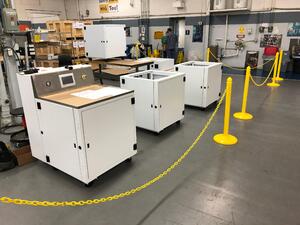
PEKO supports OEMs with high mix low volume manufacturing programs that involve complex machinery, equipment, assemblies, and integrated systems. Our work is built around coordinated manufacturing, supply chain control, quality documentation, and program execution.
Depending on the program, PEKO can support BOM validation, sourcing, CNC machining, sheet metal fabrication, welding, mechanical and electromechanical assembly, system integration, inspection, testing, kitting, part staging, documentation, packaging, and shipment.
With vertically integrated capabilities and experience supporting complex low- to mid-volume machine building programs, PEKO helps OEMs create a more controlled path from BOM release to completed machinery production.
Need Support With High Mix Low Volume Manufacturing?
If your machinery production program depends on complex BOMs, changing revisions, long-lead components, and coordinated part flow, PEKO can help evaluate the manufacturing controls needed to support repeatable HMLV manufacturing.