

Choosing between prototype manufacturing companies can affect much more than the first build. For complex hardware, the partner you select can influence how quickly problems are resolved, how well engineering changes are captured, and how smoothly the program moves into later stages of new product introduction (NPI).
The challenge is that prototype manufacturers can look similar on the surface while being set up for very different work. Some are best suited to producing individual parts from finished drawings. Others operate more like a prototype development company, supporting evolving designs, coordinating custom and purchased components, integrating complete systems, and staying involved as the product matures.
If you are deciding where to get a prototype made, this guide explains what to consider when evaluating potential suppliers—from engineering and build capabilities to sourcing, quality, communication, and downstream manufacturing support.
When Does Prototype Outsourcing Make Sense?
OEM engineering teams may be able to handle early or narrowly focused builds internally. As the product becomes more complex, however, prototyping may require machining, fabrication, sourcing, assembly, controls integration, inspection, or testing that extends beyond the resources available in-house.
Coordinating those activities across several unrelated suppliers can create additional handoffs. Build issues may take longer to resolve, responsibility can become less clear, and useful manufacturing feedback can get separated from the engineers making design decisions.
That is where prototype outsourcing can add value. The right prototype manufacturer can fill capability gaps, coordinate the work needed to produce and evaluate the hardware, and bring manufacturing experience that complements the OEM’s product knowledge.
Outsourcing does not mean giving up ownership of the product. The OEM can continue to own the design and technical direction while the manufacturing partner provides the resources and build experience needed to get a product prototype made.
What to Look for in Prototype Manufacturing Companies
Once you decide to outsource, the next question is what kind of partner the program actually needs. Prototype manufacturers can differ significantly in the scope and complexity of work they are equipped to support.
Start With the Role You Need
Not every prototype manufacturer needs to play the same role.
A supplier focused on producing individual parts may be a good fit when drawings are complete and the requirement is well defined. A complex product prototype can require something broader. The design may still contain open engineering questions, purchased components may need to integrate with custom hardware, or assembly and testing may uncover issues that require changes.
In those cases, look for a partner that can support the complete build rather than treating each component as a separate order.
A prototype development company supporting this type of work should be able to respond to issues uncovered in hardware and work with the OEM team as the design evolves. The important distinction is not simply whether engineering is available, but whether engineering and manufacturing can stay connected throughout the build.
Engineering Support During the Build
Physical hardware often reveals things that were difficult to see in CAD. A mechanism may interfere with another subsystem. Wiring may be difficult to route. A tolerance may create a manufacturability or assembly issue. Access for testing or service may be tighter than expected.
Ask prospective prototype companies what happens when those problems appear.
There should be a clear way to bring build observations back into product development engineering, determine whether a change is needed, and update the product definition when appropriate. For developing products, that feedback loop can matter more than the size of the supplier’s equipment list.
Manufacturing & System Integration Capabilities
Capabilities should be evaluated against the product, not by counting machines or processes.
A complex machinery or electromechanical prototype may combine precision components, fabricated structures, purchased hardware, electrical systems, controls, motion, and other subsystems. The partner does not necessarily need to perform every operation internally, but it should be able to coordinate the work required for the complete build.
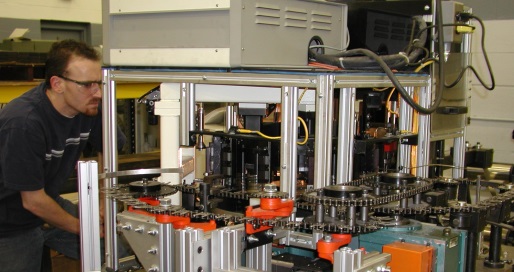
This is an important distinction when comparing hardware prototyping companies. A supplier accustomed to shipping loose parts may be very different from one that routinely assembles and integrates complete mechanical, electrical, and electromechanical products.
Look for experience that reflects the complexity of your product at the system level.
Quality, Inspection, & Test Resources
A prototype should provide usable information, not simply physical hardware.
Inspection and testing can show whether the build is meeting its intended requirements and can uncover manufacturing, dimensional, or documentation issues that need attention.
The level of support will vary by program. Focus on whether the prototype manufacturer has the appropriate inspection, test, and quality resources for your product and whether results can be communicated clearly enough to guide the next engineering decision.
For regulated or technically demanding products, also consider whether the quality system is appropriate for where the program is expected to go next.
BOM, Sourcing, & Change Control
Complex prototypes often combine custom parts with components purchased from multiple suppliers. As the design changes, those decisions can affect lead time, supply chain risk, fit, interfaces, cost, and subsequent builds.
Ask how prospective prototype manufacturers manage BOM revisions, supplier sourcing, substitutions, long-lead components, drawing changes, and updated specifications.
When testing or assembly leads to an approved change, the next build should reflect it in the technical documentation. That discipline becomes increasingly important as the design matures and the team needs confidence in exactly what configuration was built and evaluated.
Program Ownership & Communication
Prototype programs rarely move forward without questions or changes. Components get delayed, drawings need clarification, and hardware sometimes behaves differently than expected.
When evaluating prototyping companies, find out who will coordinate the program, how technical and schedule issues are communicated, and how decisions are documented.
Clear ownership is especially valuable in prototype outsourcing programs that involve several engineering disciplines, manufacturing processes, and suppliers. A strong working relationship will not prevent every problem, but it can make problems easier to surface and resolve.
Can the Partner Support What Comes After the Prototype?
A working prototype is an important milestone, but it may not be the end of the supplier relationship.
Some prototype development firms specialize in early builds. Once the design stabilizes, the OEM may need to transfer drawings, BOMs, supplier knowledge, assembly experience, and test information to another manufacturer.
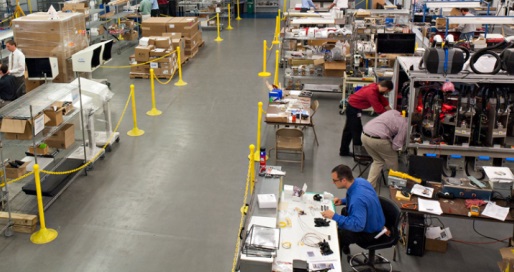 For products with a defined path toward production, consider that handoff before selecting a prototype manufacturing company.
A company that can support later NPI stages may be able to carry lessons from prototyping into pilot builds, manufacturing process development, launch, and recurring production. That continuity can reduce the amount of technical and manufacturing knowledge that has to be rebuilt during a supplier transfer.
Prototype work should still leave room for engineering changes. The advantage is simply having a credible path forward when the product becomes ready for more controlled manufacturing.
How to Compare Prototype Manufacturing Companies
Prototype cost matters, but quote totals rarely tell the whole story.
One prototype manufacturing company may be quoting only custom parts, while another includes sourcing, engineering support, assembly, integration, inspection, or testing. Make sure you understand what each supplier expects you to provide and what is included in its scope.
Evaluate schedule the same way. A short lead time is meaningful only if it accounts for the complete build rather than one portion of it.
The best choice is not necessarily the lowest quote or the company with the longest capability list. It is the partner whose experience, scope, and operating model fit what the program actually requires.
Questions to Ask a Potential Prototype Partner
Before moving forward with prototype outsourcing, compare hardware prototyping companies on more than price and lead time. The following questions can help determine which suppliers are equipped to support the broader program:
- Have you built products with similar mechanical, electrical, or system complexity?
- How do engineering and manufacturing teams work together when build issues arise?
- Do you assemble and integrate complete products or primarily supply prototype parts?
- Can you manage both custom and purchased components?
- What inspection and testing resources are available?
- How are drawings, BOMs, specifications, and engineering changes controlled between builds?
- Who owns program communication, scheduling, and technical coordination?
- Can you support additional prototype iterations and later NPI stages if the program progresses?
The answers should help you distinguish between a company that can manufacture prototype hardware and one equipped to support the broader development program.
Choosing a Partner for Complex Prototype Programs
A successful prototype outsourcing strategy starts with choosing a prototype development company or manufacturer that fits both the product’s current needs and where the program is expected to go next.
For complex mechanical, electrical, and electromechanical products, look beyond individual manufacturing processes. Consider whether the partner can support an evolving design, coordinate the physical build, manage components and documentation, evaluate the hardware, and carry useful knowledge into subsequent stages of NPI.
If your program requires that broader level of support, learn more about PEKO’s prototype development services, then use the form below to share your product, build objectives, and expected path toward manufacturing.