

Choosing a contract manufacturing assembly partner is a major sourcing decision for original equipment manufacturers (OEMs). The right partner can improve production control, quality, delivery, supplier coordination, and scalability. The wrong partner can create quality issues, schedule delays, cost overruns, and supply chain risk.
This is especially true for complex machinery, equipment, instrumentation, electromechanical assemblies, and integrated systems that require machining, fabrication, welding, sourcing, assembly, testing, documentation, and program management to work together.
What Is Contract Manufacturing Assembly?
Contract manufacturing assembly is the outsourced production and assembly of a product, subsystem, machine, or higher-level assembly by a qualified manufacturing partner. The OEM typically owns the design, specifications, and product requirements, while the manufacturing partner builds the product to those requirements.
For complex OEM programs, this may include engineering review, bill of materials (BOM) support, sourcing, precision machining, sheet metal fabrication, welding, finishing, mechanical assembly, electrical assembly, electromechanical assembly, system integration, inspection, testing, packaging, and shipment.
The goal is to give the OEM a controlled manufacturing path without requiring every production capability to be built and managed internally.
Why the Right Contract Manufacturing Assembly Partner Matters
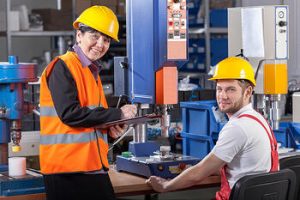
Outsourcing can reduce internal burden, but it also shifts major execution responsibility to the manufacturing partner. That partner may be responsible for sourcing parts, interpreting technical documentation, managing assembly workflows, controlling quality, resolving production issues, and meeting delivery requirements.
For simple products, a basic assembler may be enough. For complex OEM builds, the partner needs the systems, equipment, people, and experience to manage a multi-step manufacturing program.
A strong contract manufacturing assembly partner should help reduce supplier handoffs, improve production visibility, maintain traceability, identify manufacturability issues earlier, and coordinate fabrication, assembly, testing, and shipment through a controlled process.
What to Look for in a Contract Manufacturing Assembly Partner
1. Vertically Integrated Manufacturing Capabilities
Vertical integration is one of the most important factors to evaluate. A vertically integrated manufacturer can perform more of the build in-house instead of outsourcing large portions of the program to separate suppliers.
Every supplier handoff adds risk. If machining, fabrication, welding, finishing, assembly, and testing are spread across several vendors, the OEM may face more coordination work, schedule uncertainty, and quality issues late in the process.
Look for relevant in-house capabilities such as CNC machining, sheet metal fabrication, welding, mechanical assembly, electrical assembly, electromechanical assembly, finishing support, inspection, final testing, packaging, and logistics coordination.
A partner does not need to perform every process internally, but they should control enough value-added work to reduce risk and improve accountability.
2. Complex Assembly and System Integration Experience
Not every manufacturer that offers assembly is equipped for complex builds. Some companies are best suited for simple hardware installation or repetitive product assembly. Others can manage higher-level assemblies, electromechanical systems, and equipment that requires mechanical, electrical, and controls-related integration.
A complex assembly may include precision-machined parts, fabricated frames, enclosures, wiring, cable harnesses, sensors, motion components, test fixtures, or multiple subassemblies that need to come together in a specific sequence.
Before choosing a partner, ask whether they have experience with mechanical assembly, electromechanical assembly, box builds, integrated equipment, functional testing, and production transfer. The right partner should understand how individual parts become a finished assembly or integrated system.
3. Strong Quality Systems and Traceability
Quality should be built into the process, not treated as a final inspection step. For complex contract manufacturing and assembly programs, the partner’s quality system affects reliability, documentation control, and customer confidence.
Evaluate whether the manufacturer has a documented quality management system aligned with your product and industry requirements. Depending on your market, certifications such as ISO 9001, ISO 13485, AS9100, ITAR registration, or other regulatory requirements may be important filters.
A qualified partner should be able to discuss inspection planning, material traceability, nonconforming material control, corrective action, controlled documentation, first article inspection, testing requirements, and acceptance criteria.
4. IP & Information Security
Information security and IP protection should also match the needs of the program. If the product involves sensitive design data, proprietary drawings, test methods, controlled information, or restricted work areas, ask how the manufacturer controls access to customer files, systems, technical documentation, and physical production areas.
These controls should be evaluated alongside the manufacturer’s quality and documentation systems, particularly when the program involves sensitive or regulated technical information.
5. A Dedicated Program Team
Complex builds require coordination. A strong manufacturing partner should assign a cross-functional team that understands the product, production process, and customer expectations.
That team may include a program manager, manufacturing engineers, quality engineers, production planners, procurement specialists, assembly leads, technicians, and inspection personnel.
A dedicated team creates clearer communication and stronger accountability. The partner should provide defined points of contact and a structured process for managing changes, issues, milestones, and deliverables.
OEMs should know who owns day-to-day communication, who can make decisions, and how engineering, quality, sourcing, and production issues will be escalated when they cross functional boundaries.
This is especially important during production transfer, early builds, or ramp-up, when documentation may still be evolving.
6. NPI and Manufacturing Readiness Support
Some OEMs approach a contract manufacturer with mature drawings, stable BOMs, and defined test requirements. Others need help preparing a design for repeatable production. In both cases, manufacturing readiness should be part of the conversation.
New product introduction (NPI) support helps bridge the gap between engineering intent and production execution. A capable partner may review drawings, validate the BOM, identify manufacturability concerns, define assembly steps, document process requirements, and recommend changes that improve repeatability.
Look for support with Design for Manufacturing and Assembly (DFMA), prototype or pilot builds, assembly sequence planning, work instructions, test procedures, production readiness reviews, and early supplier planning.
7. Supply Chain and BOM Management
Many OEMs underestimate how much supply chain work is involved in contract manufacturing assembly. Even when the design is stable, the manufacturing partner may need to source fabricated parts, machined components, commercial items, hardware, electronics, wiring, packaging, and outside processing.
A strong partner should manage the BOM with discipline. That includes understanding long-lead items, supplier risk, revision control, approved alternatives, inspection needs, and inventory planning.
Ask potential partners how they handle BOM review, sourcing, supplier qualification, long-lead components, revision changes, obsolete parts, forecasting, packaging, and shipment requirements.
8. Relevant Industry Experience
Different industries have different expectations. A medical equipment program may require documentation and traceability practices that differ from a renewable energy, semiconductor, defense, telecommunications, or industrial equipment program.
Industry experience means the manufacturer understands the requirements that affect production, such as inspection expectations, cleanliness requirements, documentation, configuration control, supply chain sensitivity, testing protocols, and regulatory considerations.
Before selecting a partner, ask whether they have built products with similar complexity, supported similar production volumes, and worked under comparable quality or compliance expectations.
9. Financial Stability and Long-Term Fit
Contract manufacturing and assembly programs often require upfront planning, labor, material purchasing, tooling, fixtures, equipment, and floor space. If the partner is not financially stable, the program can be exposed to avoidable risk.
Financial stability matters because the manufacturer may need to purchase materials, reserve capacity, train personnel, invest in equipment, and support production before payment is fully realized.
Beyond financial health, evaluate long-term fit. The right partner should be able to support repeat production, engineering changes, demand changes, and ongoing quality improvement beyond the first build.
Questions to Ask Before Choosing a Contract Manufacturing and Assembly Partner
Before selecting a contract manufacturing assembly partner, ask questions like:
- What manufacturing and assembly work do you perform in-house?
- What work would be outsourced, and how is that supplier network managed?
- Have you built products with similar complexity, volume, or documentation requirements?
- How do you handle production transfer from another supplier or internal facility?
- What quality systems and traceability controls are in place?
- Who would be on the dedicated program team?
- How do you manage BOM validation, sourcing, and long-lead components?
- Can you support NPI, pilot builds, and production readiness planning?
- What inspection, testing, or factory acceptance processes can you support?
- Can you scale with the program if demand increases?
- How do you protect customer IP and control access to technical data?
These questions can help separate a basic assembler from a true manufacturing partner.
When PEKO May Be the Right Fit
PEKO supports OEMs that need more than a standalone assembly supplier. Our work is focused on complex machinery, equipment, assemblies, and systems that require coordinated manufacturing, assembly, integration, quality control, and program management.
PEKO may be a strong fit when an OEM needs support with:
- Build-to-print contract manufacturing
- Production transfer from another supplier or internal facility
- New product introduction and early production builds
- Low- to mid-volume manufacturing programs
- Mechanical and electromechanical assembly
- Higher-level assemblies and integrated systems
- Programs requiring quality documentation, traceability, and final testing
With vertically integrated manufacturing capabilities, engineering support, assembly resources, quality systems, and supply chain coordination, PEKO helps OEMs reduce supplier complexity and establish a more controlled path from product requirements to finished build.
Looking for a Contract Manufacturing and Assembly Partner?
 Choosing the right partner requires more than comparing quotes. OEMs should evaluate whether a supplier has the technical capabilities, quality systems, program management structure, assembly experience, and production controls required to support the product over time.
If your company is evaluating a contract manufacturing and assembly partner for complex equipment, machinery, assemblies, or integrated systems, PEKO’s contract manufacturing guide can help you compare suppliers more effectively. Download the guide to review key evaluation criteria, common outsourcing considerations, and the capabilities to look for before selecting a manufacturing partner.