

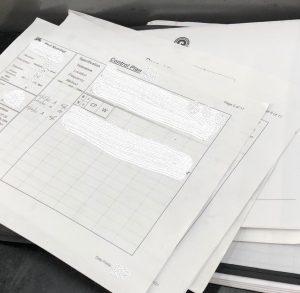
A manufacturing control plan helps turn OEM quality requirements into practical controls that manufacturing, inspection, assembly, and test teams can follow during the build.
PEKO supports manufacturing control plan development as part of active OEM contract manufacturing and NPI programs involving customer-owned machinery, equipment, assemblies, and systems. Our team helps define the inspection points, critical characteristics, process controls, acceptance criteria, and reaction plans to support repeatable production across our precision machining, sheet metal fabrication, assembly, and complex equipment manufacturing operations.
This work connect customer specifications, drawings, bills of materials, routers, work instructions, test procedures, and quality records into a production documentation package that is clear, controlled, and usable on the floor.
Define What Good Looks Like Before Production Begins
Complex OEM builds cannot rely on informal quality expectations. Before production begins, manufacturing and inspection teams needs to understand which requirements matter most, how they will be checked, and what action is required when a result does not meet the defined standard.
That is the role of a control plan in manufacturing. It connects product requirements, process steps, inspection methods, measurement frequency, acceptance criteria, responsible teams, required records, and reaction plans into one controlled quality document.
For OEMs transferring a program, launching a new build, preparing for production ramp, or evaluating production readiness, control plan development helps answer practical questions before they become production issues:
- What features, dimensions, functions, or process outputs need to be controlled?
- Which characteristics are critical to fit, function, reliability, safety, performance, or customer acceptance?
- Where should inspection or verification occur during the manufacturing process?
- What measurement method, gage, fixture, tool, inspection equipment, or test equipment is required?
- What tolerance, specification, or acceptance criterion applies?
- How often should each requirement be inspected or monitored?
- What documentation or quality record is required?
- What should happen if a requirement is not met?
PEKO defines these controls in the context of how the product will be sourced, fabricated, machined, welded, assembled, integrated, tested, inspected, and shipped.
Turn Quality Requirements into Build-Level Controls
Drawings, specifications, and customer requirements define what the finished product needs to meet, but they do not always tell production and inspection teams how those requirements should be controlled during the build.
A manufacturing control plan closes that gap by turning quality requirements into build-level controls that engineering, manufacturing, inspection, assembly, test, and program teams can apply consistently.
For PEKO programs, that may mean connecting control plan inputs to:
- Drawing requirements and dimensional tolerances
- Critical characteristics and customer-defined quality requirements
- Material, finish, weld, torque, electrical, functional, or performance requirements
- In-process inspection points and final inspection requirements
- Factory acceptance test procedures and documented verification steps
- Process controls that help reduce variation or identify issues earlier
This helps prevent quality requirements from sitting in disconnected documents that are difficult for production teams to interpret or apply.
What PEKO Supports in Control Plan Development
Control plan development depends on the product, process, customer requirements, production maturity, and level of quality documentation required for the program.
PEKO may support manufacturing control plan development by helping define:
- Product and process characteristics that require inspection, verification, or monitoring
- Critical characteristics tied to fit, function, reliability, safety, performance, or customer acceptance
- Inspection points across machining, fabrication, welding, assembly, integration, testing, final inspection, and shipment preparation
- Measurement methods, gages, fixtures, tools, inspection equipment, and test equipment
- Quality requirements, tolerances, specifications, and acceptance criteria
- Sampling requirements, inspection frequency, and recordkeeping needs
- Process controls used to reduce variation or detect issues earlier
- Reaction plans for out-of-tolerance conditions, failed inspections, or nonconforming results
- Revision updates tied to engineering changes, production feedback, supplier changes, or process improvements
Instead of leaving teams to interpret requirements independently, the control plan clarifies what must be checked, when it must be checked, how it should be checked, and what response is expected when something is out of specification.
Control Points & Reaction Plans Across the Workflow
A strong manufacturing control plan follows the product through the stages where quality can be affected.
For complex machinery, equipment, assemblies, and systems, control points may apply during incoming material review, in-process machining, sheet metal fabrication, welding, mechanical assembly, electrical assembly, system integration, factory acceptance testing, final inspection, packaging, or shipment preparation.
PEKO helps evaluate where control points belong based on the production workflow and approved documentation package. That may include early checks that prevent downstream rework, in-process checks that confirm critical work before the next operation, final checks that support customer acceptance, and reaction plans that define how nonconforming results should be escalated, reviewed, recorded, and resolved.
By defining controls before issues move downstream, PEKO helps reduce the risk of scrap, rework, production delays, and integration issues that can affect later assembly or system-level testing.
Align Control Plans with The Production Package
A manufacturing control plan is most effective when it is connected to the manufacturing documentation that already guides the build.
PEKO helps align control plan documentation with drawings, CAD files, BOMs, routers, manufacturing work instructions, inspection records, Failure Modes and Effects Analysis (FMEA) inputs where applicable, PPAP documentation when required by the customer, test procedures, factory acceptance test documentation, and final quality records.
This alignment helps reduce gaps between engineering intent, production execution, inspection activity, and customer acceptance requirements. It also keeps quality expectations from becoming isolated in a document that does not reflect the way the product is actually built.
For OEMs evaluating PEKO as a manufacturing partner, this alignment is important because quality requirements need to be executable inside the production workflow, not just documented for reference.
Keep Control Plans Current as Requirements Change
A control plan should stay aligned with the product, process, and production documentation it supports. As an OEM program moves through NPI, transfer, ramp, or ongoing production, control requirements often need to be clarified or updated based on build learnings, especially when transitioning from another supplier, internal facility, or early-stage environment into a PEKO-managed workflow.
PEKO may review control plan documentation for completeness, revision accuracy, inspection readiness, process alignment, and consistency with the approved build package. Updates may be needed when drawings are revised, BOM records change, suppliers are added or replaced, inspection methods improve, production feedback identifies a better control point, nonconformances reveal a process risk, or customer requirements are clarified.
If the control plan does not reflect current requirements, teams may inspect against outdated criteria, miss required controls, or rely on tribal knowledge instead of documented quality expectations.
Work With PEKO On Manufacturing Control Plan Development
PEKO helps OEMs translate quality requirements into clear production controls for complex manufacturing programs. Use the form below to discuss inspection points, critical characteristics, process controls, acceptance criteria, reaction plans, or related production documentation needs with our team.