

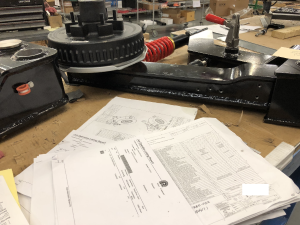
Manufacturing documentation gives OEM production teams the controlled technical records needed to build, inspect, test, and repeat complex products.
PEKO supports manufacturing documentation for customer-owned machinery, equipment, assemblies, and systems as part of active new product introduction, production transfer, contract manufacturing, assembly, and equipment build programs. Through our engineering documentation services, we help organize, update, and maintain the drawings, bills of materials, routers, work instructions, quality plans, and test procedures required to execute the build.
This support is provided in tandem with PEKO-managed manufacturing programs and is not offered as a standalone documentation-only service.
Engineering Documentation Services for Complex OEM Programs
Manufacturing documentation translates engineering intent into controlled production information.
For complex equipment and assembly programs, the production documentation package must support several functions at once. Engineering teams need current design records. Procurement teams need accurate part and supplier information. Production teams need routers, travelers, work instructions, setup notes, and build records. Quality teams need inspection criteria, control requirements, and acceptance standards. Test teams need defined procedures, expected results, and verification records.
PEKO reviews manufacturing and technical documentation against the actual production workflow so the information supports how the product will be fabricated, machined, welded, finished, assembled, inspected, tested, packaged, and shipped.
What Is Included in a Manufacturing Documentation Package?
The required manufacturing documentation set depends on the product, process, maturity level, and production stage. As part of active NPI, production transfer, contract manufacturing, and equipment build programs, PEKO may support:
- Bill Of Materials: Part numbers, quantities, vendors, costs, revision levels, long-lead items, and higher-level assembly structure.
- CAD Models & Design Records: 3D models, native CAD files, exported files, design records, and supporting geometry used for manufacturing review.
- Component & Assembly Drawings: Detail drawings, assembly drawings, fabrication drawings, tolerances, materials, finishes, notes, and critical characteristics.
- Manufacturing Methods Routers: Operation-level routing that defines how work moves through fabrication, machining, welding, finishing, assembly, inspection, and test.
- Manufacturing Travelers or Build Records: Job-specific documentation used to track required operations, production status, inspection activity, and build history.
- Manufacturing Work Instructions: Step-by-step instructions, visuals, setup notes, tooling notes, handling requirements, and process details used by production and assembly teams.
- Inspection Documentation: Inspection points, check sheets, dimensional requirements, sampling requirements, measurement methods, and acceptance criteria.
- Quality Control Plans: Monitored characteristics, process controls, tolerances, inspection frequency, and response expectations for production quality.
- Test Procedures & Test Records: Functional test steps, factory acceptance test procedures, expected results, data capture requirements, and verification records.
- Tooling, Fixture, & Setup Documentation: Fixture notes, setup requirements, special tooling references, and production aids needed to repeat the build.
- Supplier & Purchasing Documentation: Approved vendor details, make-versus-buy information, purchase specifications, material requirements, and sourcing notes tied to the production package.
- Packaging, Labeling, & Shipping Specifications: Handling, protection, packaging, labeling, shipment, and customer delivery requirements.
- Revision & Change Records: Engineering changes, document updates, supplier changes, manufacturing feedback, and sustaining production revisions.
These manufacturing documents help align engineering requirements with sourcing, production, inspection, assembly, testing, and shipment.
When Manufacturing Documentation Needs Engineering Review
PEKO’s engineering documentation services are typically used when technical records need to be reviewed, updated, or aligned before build execution.
Common triggers include:
- A product is moving from prototype or pilot build into production
- A program is transferring from another supplier or internal facility
- Drawings, BOMs, routers, travelers, or work instructions are incomplete
- Production records do not match current engineering changes
- Supplier, purchasing, or long-lead item data needs to be updated
- Assembly teams need clearer build instructions or sequence details
- Inspection or test requirements are not fully documented
- Control plans, inspection records, or acceptance criteria need clarification
- Packaging, labeling, or shipping requirements need to be defined
- A complex build requires stronger revision control before production ramp
The goal is to identify documentation gaps before they create sourcing delays, production questions, inspection issues, assembly rework, test failures, or delivery risk.
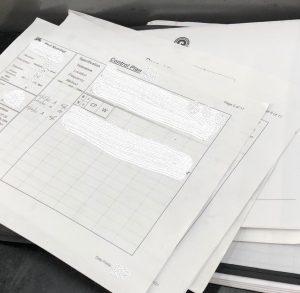
Keeping The Production Package Aligned
Manufacturing documentation works best when the core technical records agree with one another.
A drawing, bill of materials, router, work instruction, inspection plan, control plan, or test procedure may appear complete on its own, but still create production risk if it does not match the current revision, supplier data, process flow, inspection strategy, or final build configuration.
PEKO helps identify gaps such as outdated revisions, missing part details, inconsistent quantities, unclear tolerances, incomplete inspection criteria, undocumented assembly steps, and test procedures that do not match the finished equipment or assembly.
Related Engineering Documentation Services
When deeper documentation support is required, PEKO may assist with CAD drafting and drawing updates, BOM management, or manufacturing control plan development as part of the production package.
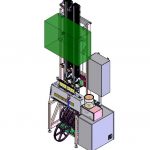
CAD Drafting
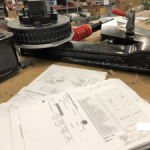
PEKO provides CAD drafting services for OEMs that need accurate manufacturing drawings, 2D drafting, 3D CAD modeling, drawing updates, and production-ready CAD records for complex machinery, equipment, assemblies, and systems.
BOM Management
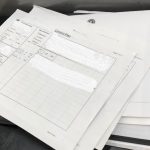
PEKO helps OEMs validate, verify, and clean up BOM data for complex manufacturing programs. Our team reviews bill of materials records for missing information, outdated revisions, sourcing gaps, supplier constraints, long-lead risks, and alternate options that may help improve cost, lead time, and production continuity. We help organize BOM data so engineering, sourcing, procurement, planning, and assembly teams can work from accurate, current, complete, and actionable information.
Manufacturing Control Plan Development
PEKO supports manufacturing control plan development for OEMs preparing complex machinery, equipment, assemblies, and systems for production. Our team helps translate quality requirements into documented inspection points, critical characteristics, process controls, acceptance criteria, and reaction plans that support production readiness.