

PEKO provides machine vision integration as part of larger OEM equipment, NPI, production-transfer, and contract manufacturing programs. Our teams coordinate vision hardware, software, controls, and physical installation with the complete machine architecture so the approved system can be verified and built consistently across qualification and production builds.
Machine Vision System Integration for Complex OEM Equipment Programs
PEKO serves as a machine vision integrator within larger automation and electromechanical equipment programs. We support both fully defined vision packages and systems with open implementation details that still require technical review.
For a released design, we carry the approved package through component procurement, installation, machine vision programming, interface setup, and functional checkout. Where requirements remain open, our engineers can help finalize camera, lens, lighting, processing, and communication details before production release.
The vision system is developed around the machine’s mechanical design, electrical package, controls architecture, operating sequence, and acceptance plan—not as a standalone retrofit. Once approved, the vision package moves through the same controlled build and verification process as the rest of the equipment.
Machine Vision Engineering & Design Finalization
When the vision architecture still has open technical requirements, PEKO can help finalize the system before production release.
PEKO’s machine vision engineering support may include reviewing:
- Camera and image-sensor requirements
- Lens selection and working distance
- Field of view and required resolution
- Lighting type, position, and control
- Part presentation and fixture requirements
- Processing hardware and software architecture
- Triggering and cycle-time requirements
- PLC, HMI, robot, and motion-system interfaces
- Environmental and installation constraints
- Inspection outputs and acceptance criteria
PEKO can also assist with final component selection, interface clarification, and design-for-manufacturing improvements. The goal is to resolve implementation risks and document an approved architecture that can be procured, installed, programmed, and verified consistently.
Machine Vision Programming, Hardware, & Controls Integration
PEKO coordinates the software, controls, electrical components, and physical hardware required for vision system integration within the complete machine.
Machine Vision Programming & Configuration
Machine vision programming may include:
- Image-acquisition and trigger setup
- Exposure and lighting control
- Calibration
- Inspection tools and measurement routines
- Pattern, edge, feature, or code detection
- Pass/fail criteria
- Position and orientation outputs
- Recipe and product-change management
- Data and result formatting
- Alarm and fault handling
- Communications with other equipment
Programming is developed around the approved functional requirements, inspection criteria, and controls architecture. Configuration files, inspection routines, recipes, and revision records can be maintained as part of the controlled equipment build package.
Camera, Lighting & Hardware Integration
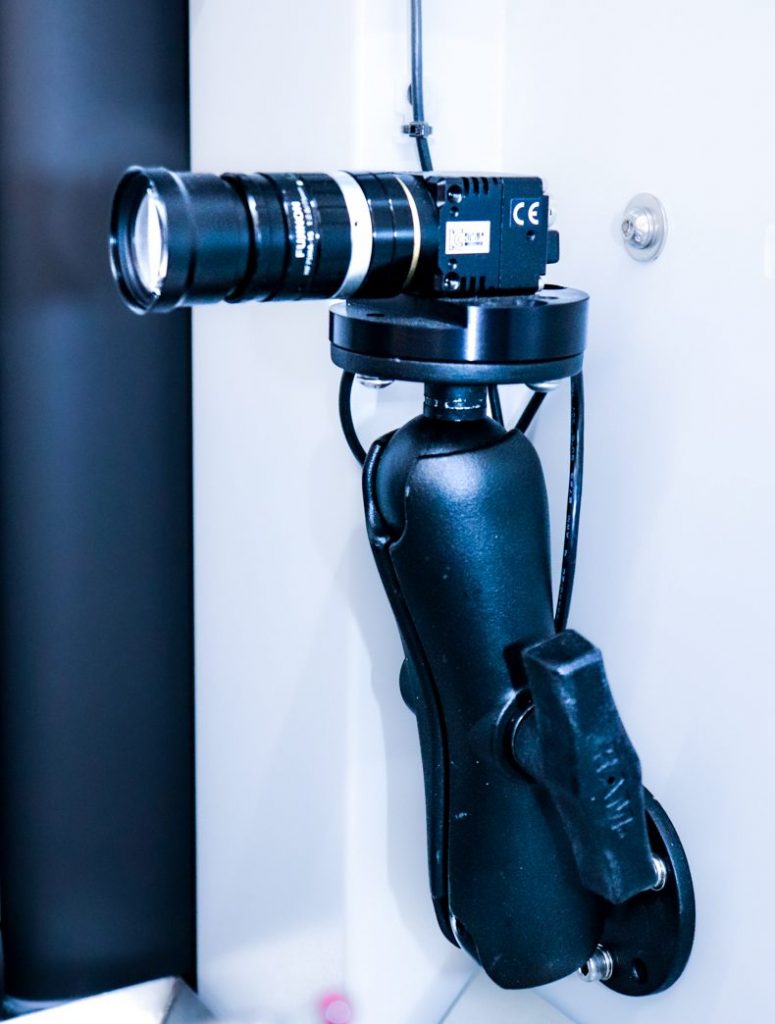
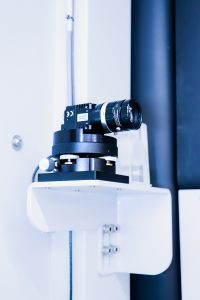
PEKO can procure and integrate approved machine vision components such as:
- Area-scan and line-scan cameras
- 2D and 3D vision systems
- Smart cameras and external vision controllers
- Lenses, filters, and optical accessories
- Continuous and strobed lighting
- Lighting controllers
- Photoelectric sensors and triggers
- Industrial computers and processing hardware
- Enclosures, brackets, mounts, and protective hardware
Integration may include mechanical mounting, alignment, power distribution, cable routing and connector installation, protective enclosures, and access for setup or maintenance. Camera, lens, lighting, and part position are treated as one imaging arrangement to support consistent image capture under production conditions.
PLC, HMI, Robot & Motion Interfaces
PEKO supports vision systems automation where inspection results must coordinate with PLC logic, HMI feedback, robots, motion systems, reject mechanisms, or other machine functions.
Vision control system integration may include:
- I/O mapping
- Trigger and handshake logic
- Pass/fail signals
- Measurement and coordinate exchange
- Robot guidance data
- Motion-system coordination
- Inspection status and HMI displays
- Recipe selection
- Interlocks and permissives
- Alarm handling and fault recovery
- Production-data communication
This machine vision automation work helps ensure that the vision result reaches the correct machine function at the proper point in the operating sequence.
System Verification & Troubleshooting
PEKO verifies the integrated vision system against the customer’s specifications, operating requirements, and acceptance criteria.
Verification may include:
- Camera and lighting startup
- Image quality and focus checks
- Trigger and exposure timing
- Calibration confirmation
- Inspection routine execution
- Pass/fail output checks
- Measurement or position-data review
- PLC, HMI, robot, and motion communications
- Reject or downstream process response
- Alarm and fault-recovery behavior
- Product-change and recipe checks
Whenever possible, verification is performed using representative acceptable parts, known defects, and expected production variation. When issues are identified, PEKO can troubleshoot lighting, optics, alignment, part presentation, programming, wiring, controls logic, communication timing, and mechanical integration. The goal is to prepare the complete system for customer review, final acceptance, and repeatable production.
As a vision systems integrator and equipment manufacturing partner, PEKO maintains configuration control over approved hardware, programming files, calibration methods, equipment interfaces, and verification steps across qualification and production builds. This helps preserve consistent performance as equipment volumes scale.
Machine Vision Applications & Platforms
OEM Applications
PEKO supports machine vision integration for functions including:
- Automated inspection and quality verification
- Dimensional measurement
- Part-presence and orientation checks
- Barcode, data-code, and character reading
- Robotic guidance and positioning
- Process monitoring and feedback
- Counting, sorting, and tracking
- Assembly verification
- Test-result capture and traceability
These machine vision applications may be incorporated into medical, semiconductor, energy, industrial, and other complex OEM equipment programs. For a broader overview of how the technology works, including common components and system types, read our guide to what machine vision is.
Typical Platforms
PEKO has experience integrating platforms from manufacturers such as:
- Omron
- Banner Engineering
- Cognex
- KEYENCE
- Basler
- Teledyne DALSA
PEKO is not limited to these manufacturers. The selected platform must support the approved imaging task, controls architecture, operating environment, cycle time, and production requirements.
Discuss Your Machine Vision Integration Requirements With PEKO
Work with a machine vision integrator that can coordinate engineering, programming, hardware, controls, and verification within the complete OEM equipment build.
Share your equipment drawings, functional requirements, inspection criteria, preferred vision platform, and expected production volumes to discuss your program.