

When an OEM product requires machining, fabrication, sourcing, assembly, testing, and quality documentation, full-service contract manufacturing can help bring those requirements together through one integrated manufacturing partner.
That coordination is especially important for complex equipment, machinery, assemblies, and integrated systems. These programs often involve precision components, fabricated structures, mechanical or electromechanical assembly, inspection requirements, test procedures, and repeatable quality controls.
Managing each step through separate suppliers can create delays, communication gaps, quality issues, and unnecessary internal workload. A full-service contract manufacturer helps OEMs coordinate more of the production process through one team, from early manufacturing review through production and ongoing support.
What Is Full-Service Contract Manufacturing?
Full-service contract manufacturing is an outsourced manufacturing model where one partner supports multiple production-related needs. For OEMs, this may include engineering support, manufacturability feedback, sourcing, custom component manufacturing, assembly, integration, inspection, testing, packaging, and repeat production.
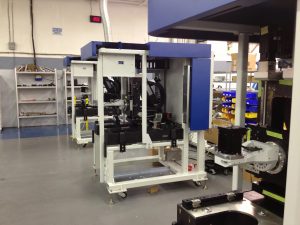
The OEM owns the product design, specifications, and customer requirements. The contract manufacturer provides the manufacturing resources, technical support, production systems, and execution needed to build the product or assembly to those requirements.
For complex OEM programs, full-service contract manufacturer may include:
- Design for Manufacturing and Assembly (DFMA) support
- New product introduction (NPI) support
- Prototype, pilot, or early production builds
- Bill of materials (BOM) review and sourcing
- CNC machining, sheet metal fabrication, welding, and finishing
- Mechanical and electromechanical assembly
- Systems integration
- Inspection, testing, and quality documentation
- Packaging, shipment, and production coordination
The value is not just access to individual services. The value comes from coordinating those services through one end-to-end contract manufacturing partner with a shared understanding of the product, requirements, and production goals.
How Full-Service Contract Manufacturing Differs from Turnkey Manufacturing
Full-service contract manufacturing and turnkey manufacturing are related, but they are not the same.
Full-service describes the breadth of capabilities a manufacturer can support, including engineering review, sourcing, fabrication, machining, assembly, testing, quality, and production management.
Turnkey describes the responsibility model. In a turnkey program, the manufacturer typically manages more of the build and delivers a completed assembly, subsystem, or equipment program.
For OEMs, the distinction matters because a full-service manufacturer may offer turnkey support, but not every turnkey program requires the same level of lifecycle support. Full-service is about integrated capability. Turnkey is about delivering a completed build with more responsibility handled by the manufacturing partner.
Why OEMs Use Full-Service Contract Manufacturing
OEMs often choose full-service contract manufacturing when a program requires more coordination than a single-process supplier can provide.
A complex equipment build may include machined parts, fabricated frames, sheet metal enclosures, purchased components, wiring, mechanical assembly, inspection, testing, and documentation. When each requirement is managed separately, OEM teams may spend too much time coordinating vendors instead of focusing on product strategy, engineering priorities, and customer needs.
A full-service partner can help OEMs:
- Reduce supplier handoffs
- Improve communication between engineering and production
- Identify manufacturability issues earlier
- Support production transfer or ramp-up
- Maintain quality and documentation controls
- Improve accountability across the program
- Free internal teams from day-to-day production coordination
This integrated contract manufacturing approach can be especially useful for low- to mid-volume OEM programs, where each build may involve different technical, supply chain, and quality requirements.
Engineering Review & Manufacturing Readiness
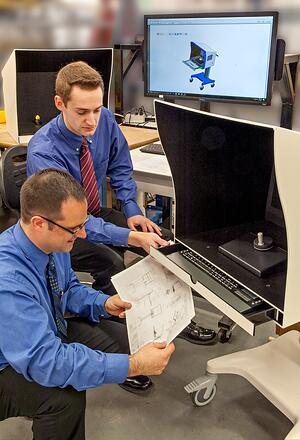
A full-service contract manufacturer should support more than production labor. For many OEM programs, the most important work begins before the first production build.
Engineering review and manufacturing readiness support help confirm whether the product documentation is complete, the BOM is accurate, the assembly process is repeatable, and the design can be built efficiently.
This may include reviewing drawings and CAD models, validating the BOM, identifying manufacturability concerns, evaluating assembly constraints, developing work instructions, defining inspection requirements, and preparing the program for production transfer or ramp-up.
For OEMs moving from early builds into repeat production, an end-to-end contract manufacturing partner can help connect engineering review, sourcing, production planning, assembly, inspection, and testing so the program is better prepared for scale.
Vertically Integrated Manufacturing Capabilities
Vertical integration is one of the main advantages of full-service contract manufacturing. A vertically integrated partner can perform more manufacturing work in-house instead of sending each process to a separate supplier.
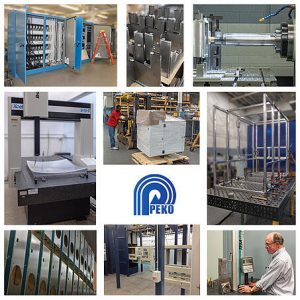
For OEMs, this matters because every handoff can add lead time, cost, communication risk, and quality exposure. When machining, fabrication, welding, finishing, assembly, and testing are spread across multiple vendors, it becomes harder to control schedule, documentation, and accountability.
Relevant in-house capabilities may include CNC machining, sheet metal fabrication, welding, finishing coordination, mechanical assembly, electrical assembly, electromechanical assembly, systems integration, inspection, testing, supply chain management, and program management.
A full-service partner does not need to perform every special process internally, but they should control enough value-added work to support quality, schedule, and production repeatability.
Supply Chain, Quality, & Program Management
Full-service contract manufacturing depends on disciplined program management. Complex OEM builds require coordination across engineering, purchasing, production, quality, suppliers, and customer stakeholders.
A qualified partner should be able to manage BOM review, revision control, sourcing, supplier communication, long-lead components, production schedules, engineering changes, quality documentation, nonconforming material, and build milestones.
Quality is equally important. A full-service contract manufacturer should have documented quality systems, controlled processes, and traceability practices that support the product’s intended market. Depending on the program, this may include inspection planning, material traceability, controlled work instructions, first article inspection, corrective action, test documentation, and final acceptance records.
PEKO’s quality systems support a range of customer and regulatory requirements, with certifications and registrations that include AS9100D, ISO 9001:2015, ISO 13485:2016, NIST compliance, and ITAR registration.
When a Full-Service Contract Manufacturing Partner Makes Sense
A full-service model may be a good fit when:
- The product is a complex machine, assembly, or integrated system.
- The build requires multiple manufacturing processes.
- Internal production capacity is limited.
- The OEM wants to reduce supplier fragmentation.
- The product is moving from prototype to production.
- A program is being transferred from another supplier or internal facility.
- Quality documentation, testing, or traceability requirements are important.
- Engineering and manufacturing teams need to coordinate closely.
A full-service partner is not always necessary for simple parts or commodity products. But for complex OEM builds, coordinating multiple capabilities under one program structure can reduce risk and improve production control.
How PEKO Supports Full-Service Contract Manufacturing
PEKO provides full-service contract manufacturing support for OEMs building complex machinery, equipment, assemblies, and integrated systems. Our work is built around vertically integrated manufacturing, engineering coordination, quality control, supply chain management, and disciplined program execution.
Depending on the customer’s needs, PEKO end-to-end contract manufacturing can support programs from new product introduction through ongoing manufacturing. Some customers come to PEKO with mature build-to-print documentation. Others need engineering and production readiness support before a product can be manufactured repeatedly.
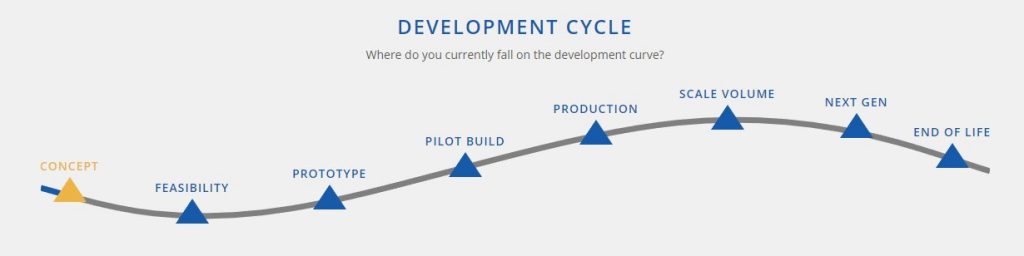
PEKO’s end-to-end contract manufacturing capabilities include engineering and NPI support, BOM validation, sourcing support, CNC machining, sheet metal fabrication, welding, finishing, mechanical and electromechanical assembly, systems integration, testing, quality assurance, and program management.
For OEMs, this integrated model can reduce supplier complexity and create a more controlled manufacturing path for complex equipment and assembly programs.
 Download PEKO’s Contract Manufacturing Guide
Choosing a full-service contract manufacturing partner requires more than comparing capabilities pages. OEMs should evaluate manufacturing readiness, quality systems, supplier control, assembly experience, testing requirements, and long-term production fit.
Download PEKO’s contract manufacturing guide to review key evaluation criteria and better understand what to look for when selecting a manufacturing partner for complex OEM equipment, assemblies, and systems.