


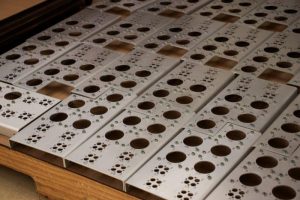
 CNC Turret Punching Services for OEM Sheet Metal Parts
CNC turret punching is a practical process for OEM sheet metal parts that require repeatable hole patterns, cutouts, louvers, dimples, bridge lances, and other formed features in the flat. At PEKO, we use CNC turret punching to support flat sheet processing for complex machinery, equipment, enclosures, chassis, panels, and assemblies, while keeping the broader fabrication workflow in view.
This process is often a strong fit when a part includes repeated features, standard punched geometry, or formed details that can be created directly in the sheet before it moves into downstream fabrication. Because PEKO also supports sheet metal forming, welding, finishing, and assembly, we can help determine the right production path based on part geometry and downstream requirements.
 What Is CNC Turret Punching?
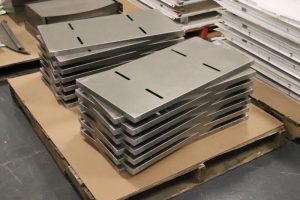
CNC turret punching is a sheet metal punching process that uses a CNC-controlled turret press loaded with multiple punch-and-die tools. The machine indexes the sheet and selects the required tools to create holes, slots, cutouts, and formed features directly in the flat pattern.
Unlike processes centered on bend geometry, CNC punching is primarily used to create features in flat sheet metal before the part moves into additional fabrication steps. That makes it well suited for parts that need consistent feature placement, repeatable patterns, and efficient processing across production runs.
What CNC Turret Punching Is Well Suited For
Turret punching is often used for parts that require a high volume of repeated features or feature combinations in flat sheet metal. Common applications include:
- Repeatable hole patterns
- Slots and electrical or mechanical cutouts
- Perforated areas
- Louvers
- Dimples
- Bridge lances
- Other formed features created directly in the sheet
This makes automated sheet metal punching useful for OEM parts that need more than simple blanks. In many cases, the process can create functional details in the flat pattern before parts move into forming, welding, finishing, or assembly.
CNC Turret Punching vs Laser Cutting
The choice between turret punching and laser cutting depends on the part.
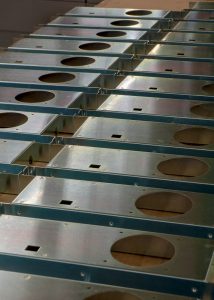
CNC turret punching is often the better option when a part includes repeated holes, common cutouts, perforations, or punched formed features such as louvers, dimples, and bridge lances. It is especially useful when those features appear consistently across a part family or production run.
Laser cutting is often the better choice when a part has intricate outer profiles, frequent geometry changes, highly variable feature sets, or shapes that do not align well with standard punch tooling. For some parts, laser cutting may also be the better fit when feature flexibility is more important than repeated tool hits.
In practice, turret punching vs laser cutting is a manufacturability decision. The right process depends on feature mix, material, quantities, tolerances, and what the part needs to do next. If a part will move into bending, welding, coating, or assembly, those downstream requirements should also be considered early.
PEKO helps customers evaluate that decision based on the full fabrication workflow rather than treating each process in isolation.
How CNC Punching Fits Into A Broader Fabrication Workflow
For many OEM programs, punched parts are only one step in a larger build. A flat sheet component may need punched features first, then move into forming, hardware insertion, welding, coating, silk screening, or final assembly.
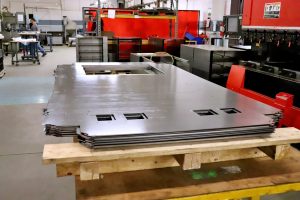 That is where PEKO’s broader sheet metal fabrication capabilities matter. CNC sheet metal punching is integrated into a larger manufacturing workflow that supports part quality, process control, and downstream fit. This is especially important for products where punched panels, brackets, covers, or structural components need to align with mating parts and finished assemblies.
For new product introduction, redesigns, or supplier transfers, PEKO can also review part geometry and manufacturing requirements up front. That helps determine whether a feature should be punched, laser cut, or approached another way based on the full program, not just a single operation.
CNC Turret Punching At PEKO
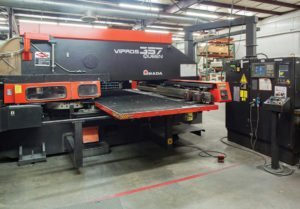
PEKO supports CNC turret punching with equipment suited for production-grade flat sheet processing, including an Amada Vipros Queen 357 CNC turret press with 58-tool capacity and auto-index stations, an Amada SPH-30C CNC punch press, and Togu III tool grinding equipment.
These capabilities support a range of sheet metal punching work without turning the process into a standalone machine-center service. The value is in applying CNC punching where it makes sense within a broader precision sheet metal fabrication workflow.
 OEM Applications for CNC Turret Punching
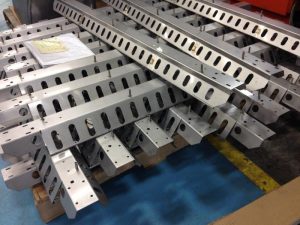
CNC turret punching can support a wide range of OEM sheet metal applications, including:
- Equipment panels
- Covers and guards
- Chassis and structural sheet metal parts
- Brackets and mounting components
- Ventilated or perforated panels
- Parts with functional formed features in the flat
Request a Quote
If you are evaluating CNC turret punching services for a sheet metal part, PEKO can help assess whether turret punching is the right process based on feature requirements, geometry, and downstream manufacturing needs. Contact our team to discuss your part or request a quote.